Quant Letter: December 2025, Week-2
114th Edition
ArXiv
Finance
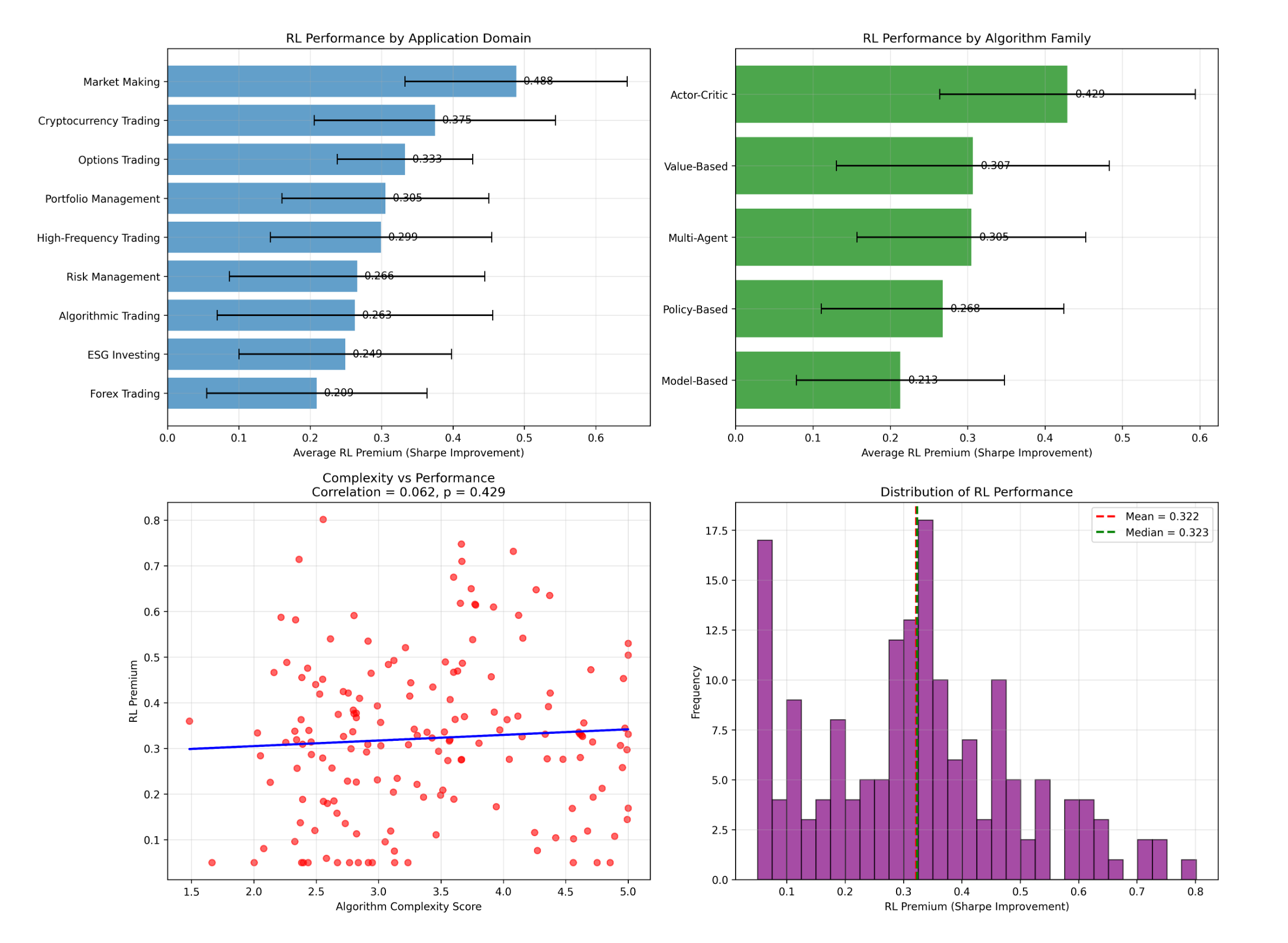
RL for Financial Decisions: Reinforcement learning improves financial decision-making by simplifying complex investment problems, emphasizing clear explanations and strong reliability over complex algorithms. (2025-12-11, shares: 2)
Unified Risk-Neutral Pricing: The paper presents a new approach to pricing zero-coupon bonds that aligns them with equity options for more accurate interest rate modeling. (2025-12-11, shares: 1)
MeanVariance Portfolio Optimization with Jumps: This study uses Reinforcement Learning to solve the Mean-Variance Portfolio Optimization problem, creating a profitable investment strategy that adapts to changing preferences over time. (2025-12-10, shares: 1)
Local vs Global Balance in Finance: The study uses local balance shifts in signed networks to find better-performing assets in financial crises. (2025-12-11, shares: 1)
DeepSVM: Physics-Informed Volatility: DeepSVM is a machine learning model that accurately calibrates stochastic volatility without labels, but needs better regularization for derivatives. (2025-12-08, shares: 1)
Economics
Automated Corruption Index: An automated corruption index using Brazilian municipal audit reports is efficient and more reliable than manual methods in detecting corruption. (2025-12-10, shares: 0)
Workflow is Key: The DeepNews Framework is designed to improve long-form financial writing by enhancing coherence and minimizing inaccuracies using advanced retrieval and planning techniques. (2025-12-10, shares: 0)
LLMs Excel in CFA: An evaluation of reasoning models on CFA mock exams shows that models like Gemini 3.0 Pro and GPT-5 perform well, achieving high pass rates in professional testing. (2025-12-09, shares: 0)
AI Agent Usage Patterns: A study of AI agent use with the Comet browser reveals that personal productivity and learning are the main reasons users interact with these tools. (2025-12-08, shares: 0)
Investment and Insurance Strategies: An economic agent makes choices to maximize utility by adjusting consumption, investing in safe and risky assets, and insuring against losses on a depreciating good, using a strategy from the Hamilton-Jacobi-Bellman equation. (2019-03-02, shares: 1)
RePec
Finance
Automated Trading for Emerging Market Performance: Increasing algorithmic trading and passive investing are raising risks in emerging markets during downturns, leading to the creation of a new trading system aimed at loss prevention. (2025-12-14, shares: 9)
Risk Parity Optimization with Heavy-Tailed Returns: A new portfolio optimization method, based on risk parity and non-Gaussian return distributions, is proposed to improve stability and minimize turnover in volatile markets. (2025-12-14, shares: 9)
Adaptive Market Hypothesis via Sharpe Ratio Strategies: Research indicates that Sharpe Ratio Minimae and Maximae strategies outperform traditional buy-and-hold approaches across global markets, supporting the Adaptive Market Hypothesis through observed profitability cycles. (2025-12-14, shares: 8)
Evaluating Trading Strategies: A new method in Window Data Envelopment Analysis connects decision-making units to enhance efficiency assessments, applied to foreign exchange and utility investments. (2025-12-14, shares: 5)
Statistical
Machine Learning
Machine Learning for Tail Risk: Two advanced probabilistic deep learning frameworks are developed to improve Value at Risk and Expected Shortfall estimates, aiding financial institutions in better capital allocation. (2025-12-14, shares: 6)
Quantile Connectedness in Housing Markets: The international housing market study finds that house price shocks mainly originate from the US market, indicating US interest rates impact global stability. (2025-12-14, shares: 5)
Predicting VIX Trends with ML: Machine learning can better predict the VIX by using jobless claims, improving trading strategies related to market volatility. (2024-08-23, shares: 12)
Dark Patterns in Retail Investment: The article explores dark patterns that exploit retail investors online and suggests using behavioral science and AI to create effective regulations. (2024-11-25, shares: 1)
GitHub
Finance
Automated Trading with Real-Time Data: A library that automates trading ideas with DTN IQFeed and Interactive Brokers, also supporting Alpaca, Phemex, and Telegram alerts. (2016-07-24, shares: 617)
Language Model Evaluation Framework: A framework created to assess and evaluate large language models effectively. (2023-11-14, shares: 1574)
Python Derivatives Pricing Implementation: A Python tool that implements a willow tree lattice method for pricing financial derivatives. (2017-10-06, shares: 314)
LangGraphGemini AI Equity Evaluator: An AI-based tool named LangGraphGemini used for evaluating U.S. stock equities. (2025-11-30, shares: 27)
High-Performance Financial Charting Library: An open-source Python library for financial data visualization with technical indicators, utilizing FastAPI and uPlot. (2025-12-02, shares: 71)
Trending
Claude Toolkit: AI Workflow: Claude Code offers optimized commands and workflows to boost teamwork and adaptability in coding projects. (2025-11-23, shares: 11)
BERTTopic: Topic Modeling: BERT and cTFIDF techniques are used to create clearer topics for better understanding and interpretation of information. (2020-09-22, shares: 7237)
Hacker News Capsule: LLM Analysis: A study examines Hacker News discussions from a decade ago, utilizing large language models to analyze trends and insights. (2025-12-10, shares: 232)
NubsKrawlrus: Kafka in Rust: A Rust-based solution provides a high-performance alternative to Kafka, aimed at improving data processing efficiency. (2025-09-17, shares: 1114)
Twitter
FX Anomalies and Currency Risk Premia Resource: CurrencyFactors.com is a new website that provides detailed historical data on 11 currency factors, catering to those interested in foreign exchange anomalies and currency risk. (2025-12-12, shares: 2)
Quant Crises: The article explains the market crises of 2025, caused by quantitative trading strategies. It outlines how these strategies led to instability and the effects on the financial markets. (2025-12-12, shares: 1)
Orderbook Imbalance: Please share the articles or their key points, and I will summarize them for you. (2025-12-07, shares: 45)
Python Quant Interviews: Please provide the articles or their main points so I can create the summaries for you. (2025-12-08, shares: 3)
Paper with Code
DeepCode: Doc-to-Code Synthesis: DeepCode is an autonomous framework that improves the process of turning documents into code, surpassing human experts with its advanced optimization techniques. (2025-12-10, shares: 11739)
GRAPE: Positional Encoding Framework: GRAPE is a new framework for positional encoding that combines rotations and logit biases to enhance the performance of existing methods like RoPE and ALiBi. (2025-12-10, shares: 39)


This roundup is incredibly valuable for staying current in quant finance. The RL for Financial Decisions paper particularly caught my attention because it emphasizes interpretability over complexity, which is somethign I've found critical when deploying models in production. In my experience, even sophisticated algos fail when stakeholders can't grasp the underlying logic. Curious if you've seen similar patterns where simpler, explainable approaches win out in real trading environments?